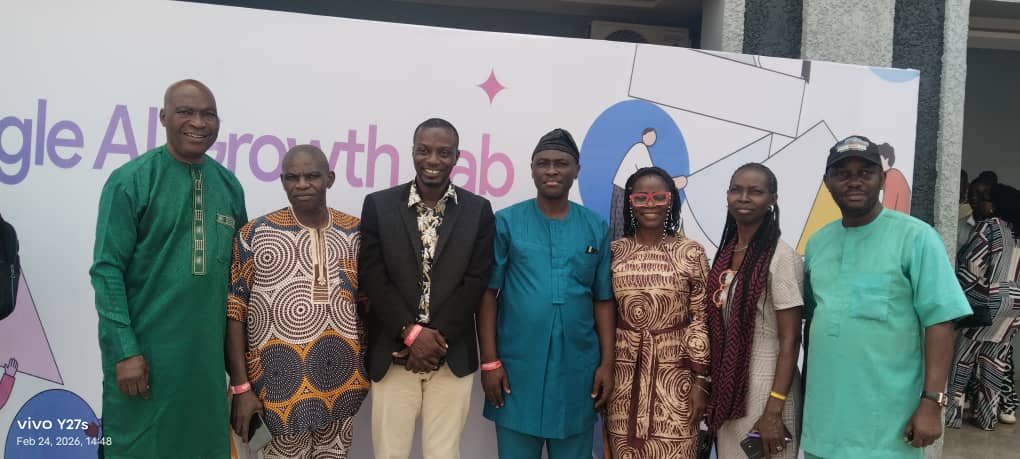
On a quiet day of Tuesday February 24, 2026, at the Amphitheatre Hall of Dominion Broadcast House, Iyaganku, Ibadan, the future of journalism took centre stage.
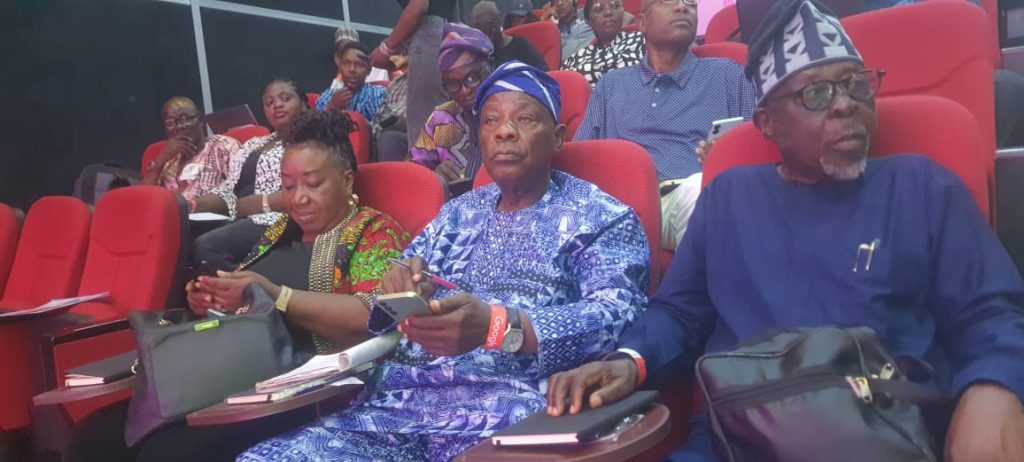
Rows of reporters, editors and media executives filled the hall, not for a political briefing or press conference, but for a one-day digital skills training organised by the Nigeria Union of Journalists (NUJ), Oyo State Council, in partnership with Google Africa.
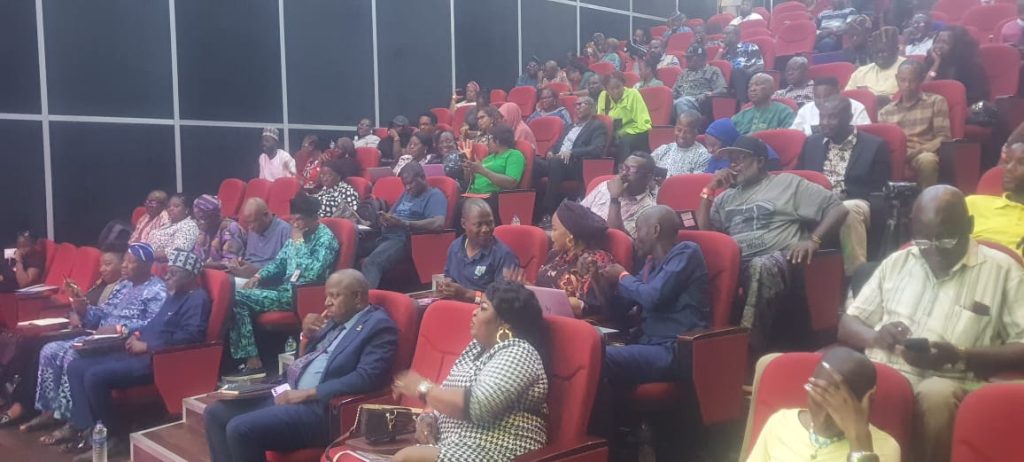
The focus was clear: Artificial Intelligence (AI) and the evolving demands of modern journalism.
For the Oyo State Commissioner for Information and Orientation, Prince Dotun Oyelade, the gathering was more than a workshop; it was a statement of intent.
With 47 years of experience in journalism, and as a former state vice chairman of the NUJ between 1984 and 1985, Oyelade spoke not just as a government official, but as a veteran of the newsroom, who has witnessed the profession’s transformation from typewriters to tablets.
He commended the Oyo NUJ leadership for what he described as a timely and strategic intervention.
“I agree entirely with Mr Akeem Abas that AI can only endanger the jobs of journalists who refuse to learn,” Oyelade said, endorsing the union’s deliberate focus on technology-driven capacity building.
His message resonated in a hall packed with practitioners, who understand that the challenges of information gathering, verification and dissemination are intensifying in an era of instant publishing and algorithm-driven content.
“The challenges of information gathering are growing by the day, and we cannot afford to be left behind,” he added.
Under the leadership of Oyo NUJ Chairman, Akeem Abas, the council has been steadily redefining its role beyond welfare advocacy to include structured professional development.
The Google training followed a two-day AI workshop held in January, marking the union’s second major technology-focused programme within weeks.
For Abas, this is not a one-off experiment but part of a broader strategy to future-proof journalists in the state.
He described the collaboration with Google Africa as a deliberate effort to equip members with practical digital skills, while reinforcing ethical and impactful reporting standards.
According to him, journalists who embrace AI tools, whether for research, verification, data analysis or content optimisation, stand to gain a clear professional advantage in an increasingly competitive media environment.
Yet, beyond skills acquisition, Abas raised a deeper concern, which is the integrity of information in Nigeria’s electoral cycle.
He called for support toward establishing a fact-checking platform ahead of the 2027 general elections, underscoring the media’s responsibility to curb misinformation and protect democratic processes.
The training featured a wider reckoning within Nigerian journalism, on the grounds that across newsrooms, automation, audience analytics and generative AI tools are reshaping how stories are sourced, written and distributed.
For many practitioners, the fear of job displacement lingers. But both Oyelade and Abas offered a counter-narrative. They framed AI as a tool and not as a threat.
Their shared message was that simple: technology would not replace journalists; it would only replace journalists who refuse to adapt.