


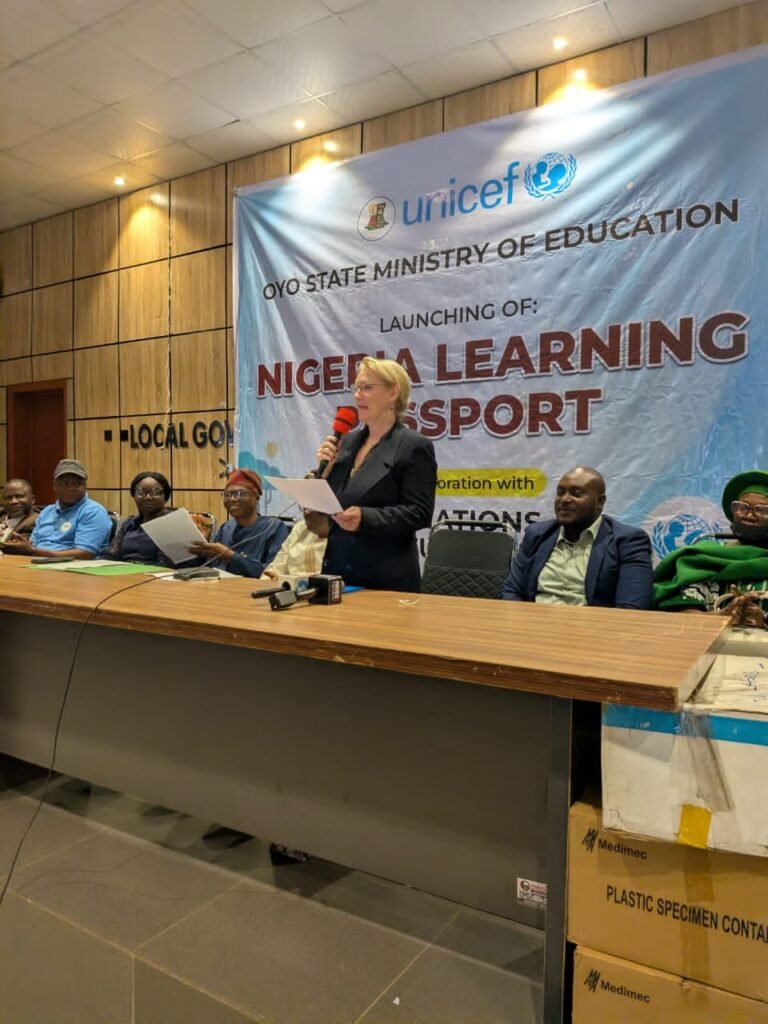
The Oyo State Government has embraced the Nigeria Learning Passport (NLP) as a major tool for taking education beyond the traditional classroom and preparing children and teachers for the demands of the 21st century.
The state Commissioner for Education, Science and Technology, Segun Olayiwola, stated this on Wednesday at the official launch of the Nigeria Learning Passport (NLP) in Ibadan.
He described the initiative as a landmark in the state’s efforts to reposition its education system through technology and innovation.
Oyo became the 26th state in Nigeria to adopt the digital learning platform, which already has about 2.4 million children and teachers using it across the country, according to the United Nations Children’s Fund (UNICEF).

Olayiwola said the rapidly changing world, driven by technology, required the state to equip children and teachers with the knowledge, skills and digital competencies needed to participate meaningfully in the digital society and economy.
He said: “The Nigeria Learning Passport offers an opportunity to take learning beyond the traditional boundaries of the classroom.
“Through the platform, learners can access educational content and learning resources using digital devices, while teachers can leverage available resources to support classroom instruction and enhance their professional capacity.”
The commissioner said learning should not stop when a child leaves the classroom, adding that the platform would enable learners to continue learning at home, in their communities and wherever appropriate digital access was available.
He said the initiative also provided an opportunity to address inequalities in access to quality learning resources, stressing that children should not be disadvantaged because of where they lived.
“Our vision is therefore to promote an education system in which every child has the opportunity to learn, every teacher has the opportunity to improve, and every school is progressively connected to the resources required for effective teaching and learning,” Olayiwola said.
He urged teachers to embrace the NLP as a tool to complement their professional expertise and enrich classroom instruction, while encouraging learners to take advantage of the platform and use technology responsibly and productively.
He also charged school administrators to provide the leadership and support necessary for sustained utilisation of the platform, with particular attention to digital inclusion for learners in underserved and vulnerable communities.
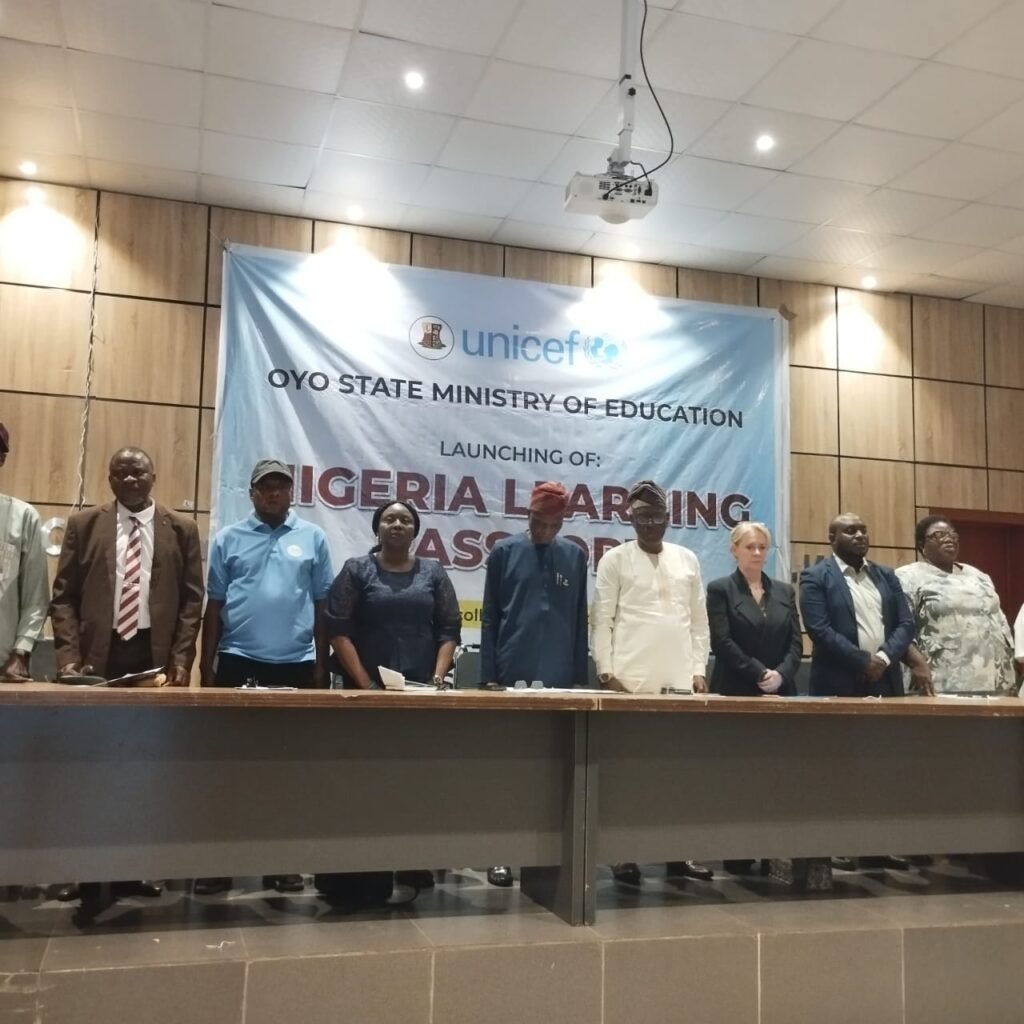
Olayiwola stressed that the success of the initiative would not be measured by its launch but by how effectively schools, teachers and learners adopted and used it.
He urged all stakeholders to take ownership of the platform and make it an integral part of teaching and learning in the state.
The NLP provides thousands of curriculum-aligned lessons in Mathematics, English and Science, accessible through phones and tablets both online and offline.
UNICEF Lagos Chief of Field Office, Celine Lafoucriere, said Airtel covers the cost of data usage, enabling families to access the platform without paying for the data required to use its learning resources.
She said the platform was developed in response to the disruption caused by the COVID-19 pandemic, when school closures affected more than 1.6 billion children globally, and has continued to provide learning opportunities, including in communities with limited or no internet connectivity.
Lafoucriere urged Oyo State to prioritise rural and underserved communities, particularly girls, sustain teacher training and monitor usage and learning outcomes.
She said the NLP was made possible through collaboration between UNICEF, the Federal Government and partners, with Microsoft developing the technology platform, GPE providing financial support, IHS Towers supporting connectivity infrastructure, TECNO providing devices and Airtel covering data costs.
Earlier, the Permanent Secretary in the ministry, Mrs Bamidele Oyinloye, described the launch as another milestone in the state’s efforts to transform education through technology.
Oyinloye said the initiative aligned with the state government’s commitment to improving learning outcomes, strengthening the education system and ensuring that no child was left behind.
She commended UNICEF, the Federal Ministry of Education, development partners and other stakeholders for their contributions, stressing that digital transformation of education required collective commitment from government, teachers, parents, learners, communities and the private sector.